
Searching the Jim Hogg County Court Docket
Start with the paperwork, not a web search. A citation, pleading, notice, or prior order names the court and the cause number, and those two facts decide where the Jim Hogg County court docket lives. No single county database holds every docket. Felony and family cases sit with the 229th Judicial District Court, filed through the district side of the unified clerk office. Probate, county civil, and misdemeanor matters go to the Constitutional County Court on the county side. A fine-only charge, debt claim, or small claim may instead belong to one of the four JP precincts.
- Identify the court level and preserve the exact cause or citation number, including letters, hyphens, and leading zeros.
- For a district hearing, check the 229th court’s dated PDF and DOCX docket archive by year, date, and civil or criminal label.
- For an indexed violation or payment matter, choose the separate District Clerk or County Clerk “Find My Case” endpoint. Search by case number when known.
- If no match appears, call the appropriate clerk or justice court. Ask about a recent filing, an archive, a restricted record, or a case outside the portal dataset.
- Request the docket sheet, register of actions, named filing, order, judgment, or certified copy from the custodian when a calendar or portal row is not enough.
An online search is only one channel among several. Jim Hogg County records can also be pursued at the clerk counter, by phone, by mail, by fax, through listed official email contacts, through a narrow Rule 12 judicial-record request, or through re:SearchTX where the court and record qualify. Ask about public-terminal access before you travel.
Jim Hogg’s 1913 Courthouse
One building in Hebbronville gathers most local record routes. The Jim Hogg County Courthouse sits at 102 E. Tilley Street, and the county and district clerk, the Constitutional County Court, the county judge, and the local 229th District Court courtroom all share that address. Climb to the second floor for the district courtroom. The four justice courts meet elsewhere, at 133 East David Street. The official County Clerk page shows the office and the record role it plays.
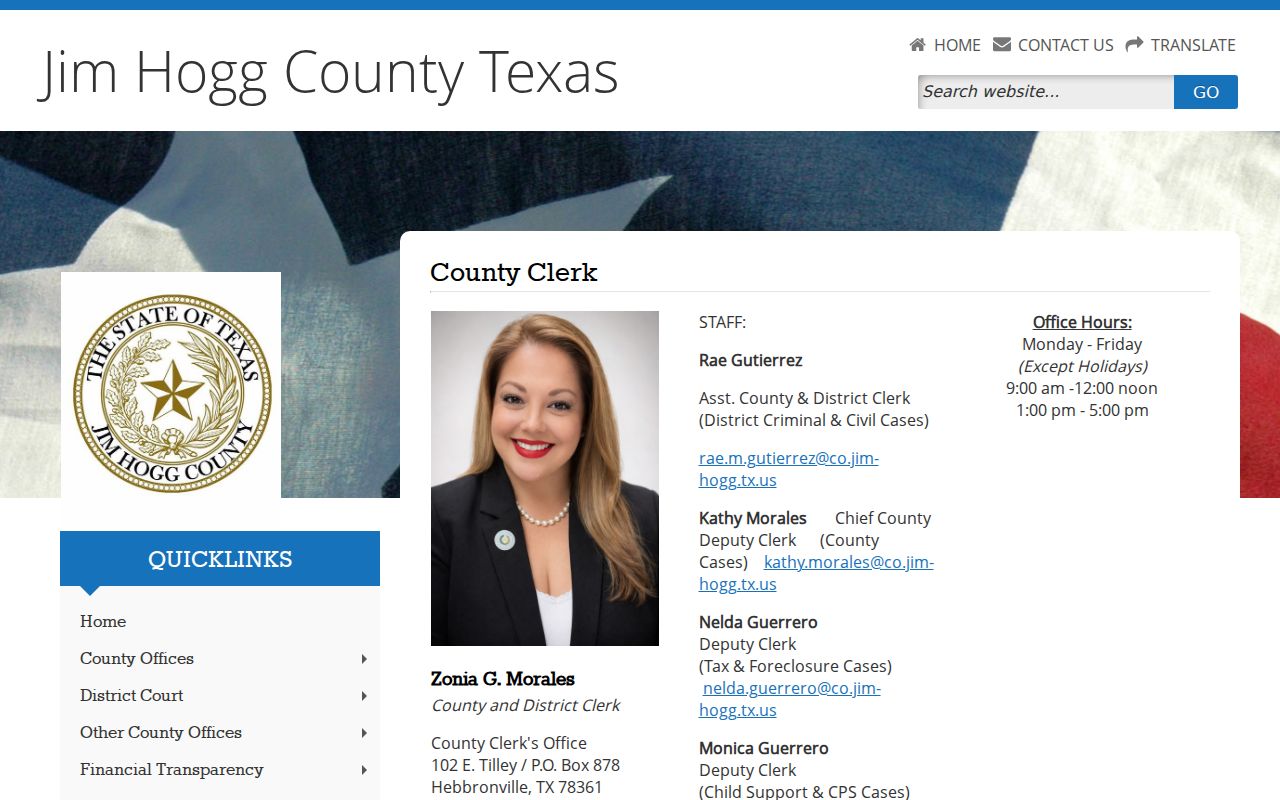
Why does one elected clerk handle both county and district functions? In a county this small, the jobs merged, though the jurisdictions and files remain separate. Always name the court level you need. Weekday service closes at noon, with holiday exceptions. So call (361) 527-4031 before any record visit. Ask then about public-terminal access.
Inside a Jim Hogg County Court Docket
The district dockets Jim Hogg County posts are date-specific setting sheets. They are not a full online register of every event. Each header names the court, county, judge, date, time, and docket type. Below it, rows compress the day into five columns. That layout tells you a matter is scheduled, nothing more. The signed order or judgment controls the result. Read it before assuming anything.
| Cause Number | The court’s identifier for the matter. Copy it exactly when searching or calling. |
|---|---|
| Style | The case caption or abbreviated names of the parties. |
| Setting | The scheduled action, such as status, motion, trial, plea, or final hearing. |
| Attorney | Counsel information shown for the calendar entry, when listed. |
| Notes | Procedural instructions, dates, or short status comments that require context. |
A setting is not an outcome. "Motion for summary judgment" on a docket sheet means the motion will be heard. It does not mean the court granted it. "Trial/jury selection" does not prove a trial happened. A jail grouping is not a finding of guilt or proof of present custody. For real case history, ask the clerk. Ask for the register and the filed documents behind each entry.
Reading Jim Hogg’s Five Columns
Criminal and civil sheets share the same compact five-column pattern. The setting terms differ. Criminal dockets carry labels like trial or jury selection, motion to reinstate bond, and probation fees. They also list restitution fees, announcement or dismissal, and pretrial diversion contract. Civil and family sheets list status, final hearing, temporary orders, and entry of a divorce decree. They add default judgment and summary judgment too. Read none of them apart from the filed ruling.
- Setting
- An event placed on the court calendar, not the final disposition.
- Register of actions
- The chronological clerk record of filings and case events, which is broader than a one-day docket.
- Filed document
- A petition, motion, notice, order, judgment, indictment, or other item in the case file.
- Certified copy
- A clerk-authenticated copy. A fee applies, and certification does not overcome a seal or access limit.
- FTA
- A notation that may refer to failure to appear, but its meaning and effect should be confirmed from the full entry.
Some shorthand resists safe expansion from the sheet alone. One sample shows "ENTRY OF DCO," and its local intended meaning is unclear. Do not guess. Give the clerk the cause number, the docket date, and the exact label. Let the office interpret it. That habit keeps a Jim Hogg County court docket entry distinct from what a later order may decide.
Courts That Keep Dockets in Jim Hogg County
Court level controls any docket search. The 229th District Court serves Jim Hogg, Starr, and Duval counties and posts Jim Hogg civil and criminal calendar files. County-level matters go to the Constitutional County Court, as its official page describes. Four justice precincts take lower-level civil work, fine-only misdemeanors, magistrate duties, warrants, and related proceedings. Appeals climb to the Fourth Court of Appeals. Federal cases run through a separate federal system entirely.
| Court | Docket Covers | Where to Search |
|---|---|---|
| 229th Judicial District Court | District criminal, civil, and family settings within its jurisdiction | Dated 229th archive, District Clerk portal, clerk or coordinator |
| Constitutional County Court | County civil, probate, Class A/B misdemeanor, and certain JP appeals | County Clerk portal and unified clerk office |
| Justice Courts, Precincts 1–4 | Fine-only misdemeanors, lower-dollar civil matters, and magistrate work | Precinct on the notice, shared JP contact, or counter |
| Fourth Court of Appeals | Intermediate civil and criminal appeals from the region | Texas appellate tools, not the county portal |
| Federal courts | Federal civil, criminal, and bankruptcy records | PACER or the correct federal clerk |
A court name on the first page of a filing beats any broad web search. A property instrument may sit indexed in the County Clerk's land-record system while a related foreclosure case proceeds in a trial court. The two records connect through facts, not through one shared database.
Four Jim Hogg Justice Precincts
Four justice-of-the-peace precincts serve Jim Hogg County, all at 133 East David Street in Hebbronville. They share one published number, (361) 527-5830. Yet the county page lists a separate judge and email for each precinct. Check your citation or notice for the precinct. That detail is the routing fact. A district docket PDF is not evidence of a JP court date. The official Justice Courts page displays the four-precinct setup and the shared contact point.
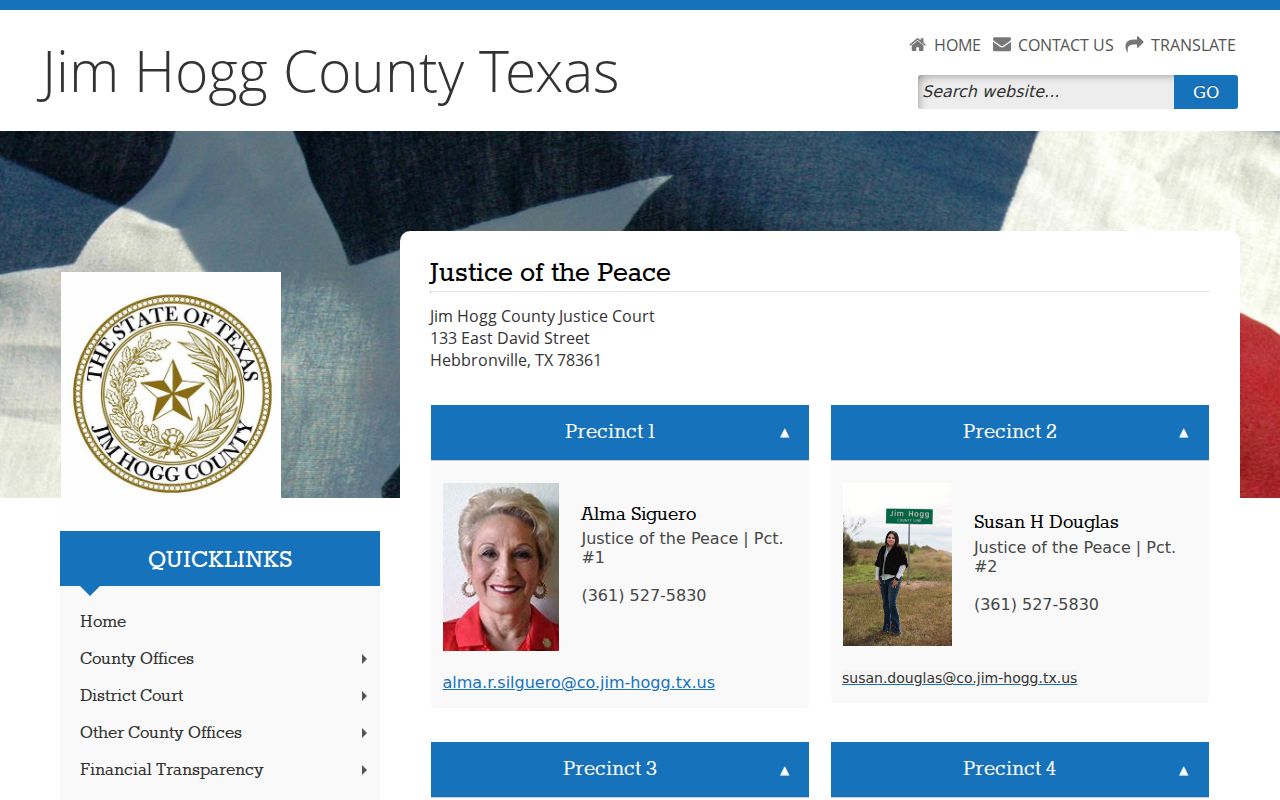
When a traffic citation, small claim, debt claim, or other justice matter fails to appear in the district or county portal, that page is the sound fallback. Have the precinct ready when you call. Give the citation or cause number, the party name, and the expected court date too.
The FY 2024 Office of Court Administration figure covers all four precincts combined. It is a tally of reporting categories, not a count of convictions and not a precinct-by-precinct docket. Its scale alone explains why a justice case should not be forced into the 229th District Court search path.
How to Find Court Dates and Settings
In Jim Hogg County, the 229th District Court page is the main public calendar for district settings. Its archive holds dated files going back across several years. They cover civil, criminal, trial, and regular dockets. Open the file first. Check that it names Jim Hogg County. Then match the cause number, style, setting, attorney, and notes. A date in the archive means little if the file behind it is missing or stale.
To confirm a current district setting, call civil coordination at (956) 716-4800 extension 8139. Criminal coordination is at (361) 279-6233. Say "Jim Hogg County" on the call, since the 229th serves three counties. County-court dates go through the clerk or the courthouse main line at (361) 527-3015. For justice court, contact the precinct directly at (361) 527-5830. The regional child-protection selector runs on a separate, limited calendar of its own.
Calendar fact: A posted setting is a snapshot. Confirm resets, continuances, cancellations, courtroom details, and attendance instructions with the clerk or coordinator.
A public calendar or notice request can go by mail, fax, or official email. The unified clerk's mailing address is P.O. Box 878, Hebbronville, TX 78361, and the fax line is (361) 232-5875. Confirm the receiving office before you send anything.
Three Jim Hogg Search Modes
The Tyler pages run by the District Clerk and County Clerk offer three working search modes. These are Case Number, Driver's License, and Name. Start with Case Number whenever you have one. License mode asks for the license number and state. Name mode wants a first name, last name, and date of birth. The Social Security, vehicle, and business-name fields sit on the form but do not work. The County and District Clerk source links the local district search and outlines the district record duties the office handles.
The local source opens a portal built for two things: finding a case and paying online. It makes no promise of a complete Jim Hogg County register. There is no document-image library, no date-range search, and no visible filter for civil, criminal, family, or probate cases.
| Mode | Required Input | Best Use |
|---|---|---|
| Case Number | Exact case number | Known portal-indexed matter |
| Driver’s License | Number and issuing state | Portal-indexed violation tied to that identifier |
| Name | First name, last name, and birth date | Portal search when the number is unknown |
A blank result has many causes. You may have searched the wrong clerk side, hit a justice case, an archived matter, or a filing too new for the system. A mismatched identifier, a restricted case, or data outside the payment-oriented portal can do the same. No result is not proof that no case exists.
Public Access to Court Dockets
Texas treats judicial records differently from executive-agency records. According to Texas Courts, court and judicial-branch files answer to judicial rules, statutes, and court orders rather than the Texas Public Information Act or federal FOIA. So the usual open-records path does not apply. Frame the request to the court itself. Name the court, the holder of the record, a date or cause number, and the exact docket or document you want.
Texas Rule of Judicial Administration 12: supplies the judicial-record request, denial, and review framework.
Government Code §552.0035: places judiciary information under Supreme Court rules or other law instead of the usual Chapter 552 path.
Rule of Civil Procedure 76a: sets the presumption and standard governing sealed civil court records.
Texas Rule 21c: requires protection of sensitive data in court filings.
Family Code Chapter 58: restricts access to juvenile records.
Say what form of access you want. Options are inspection, a plain copy, an electronic copy, or a certified copy. If the office says no, ask for the legal basis in writing. Also ask whether a redacted public version exists, and request the Rule 12.9 review route. Keep in mind that a public docket entry does not make every filed document public. Sealed, juvenile, expunged, and sensitive records may be withheld or redacted.
Jim Hogg’s Statewide Access Layer
re:SearchTX gives electronic access to records of participating Texas courts. It is a bonus layer, not a guarantee. A Jim Hogg County case, criminal record, document, or current setting may simply not appear there. State materials describe role-based access, exclusions, and charges for documents.
eFileTexas does a different job entirely. Lawyers and parties use it to send filings into Texas courts. Filing through it does not create a free public docket viewer. For an individual Jim Hogg County trial record, the Texas Courts FAQ still sends the requester to the court or clerk that keeps it. The 229th Judicial District Court page offers the county's more direct public calendar route.
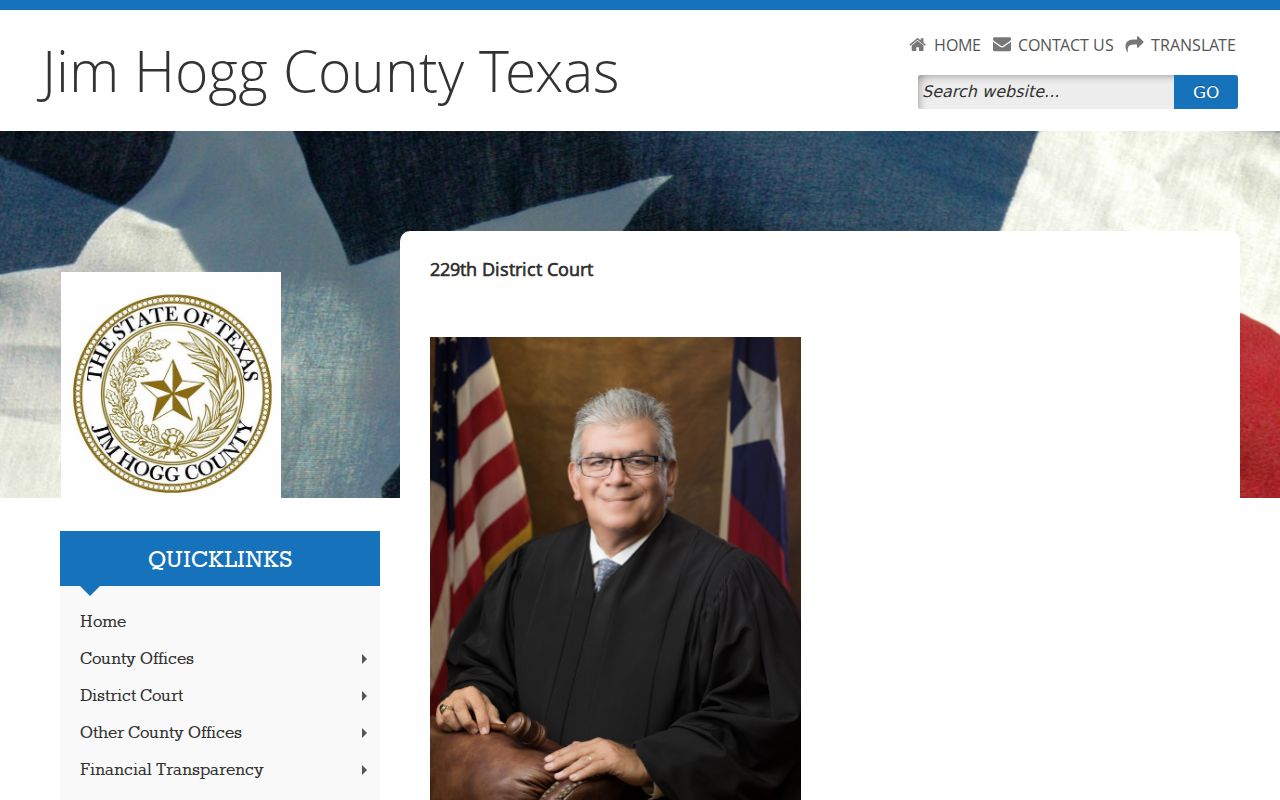
The court source posts dated docket files plus coordinator contact details. Its archive works well as a hearing snapshot. For the register, filed paper, a judgment, or a certified copy, the clerk remains the place to go.
Docket Records at the Clerk's Office
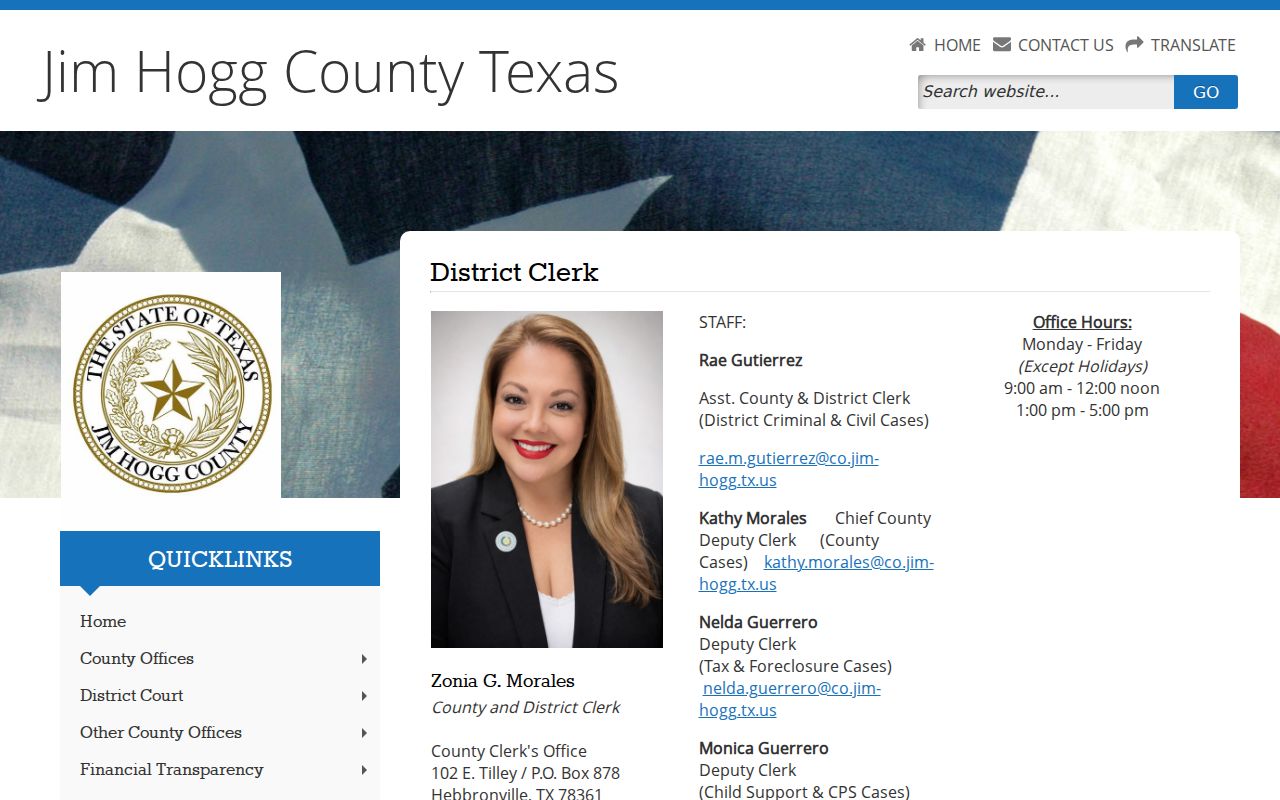
Jim Hogg County elects one County and District Clerk. Her name is Zonia G. Morales. Her office handles two record functions. On the district side, the clerk safeguards district records and records court acts. She also enters judgments and maintains party indexes, plus handling related court funds. County-side work is different. It covers Constitutional County Court records, probate, and official records. Fines and fees fall there too, along with other county functions.
Jim Hogg County and District Clerk
County and district court records
102 E. Tilley Street
Hebbronville, TX 78361
(361) 527-4031
Mail: P.O. Box 878, Hebbronville, TX 78361
Fax: (361) 232-5875
A strong request names the court level, the cause number if known, the case type, and the approximate filing or setting date. Add the exact document and the copy type you want. The county page routes district criminal and civil matters, county cases, tax and foreclosure matters, and child-support or CPS work to different staff members. Check that routing before asking for a copy.
The fee baselines come from statute. A district-clerk search with no docket number supplied costs $5, a certificate or seal costs $5, and printed copies run $1 per page. County Clerk certification is also listed at $5, with printed copies at $1 per page. Electronic fees vary by length under the cited chapters. The local 2025 fee schedule may control current totals, so confirm the price and payment method before you send any funds.
Jim Hogg’s District Docket Scale
The Office of Court Administration publishes yearly totals. They show the workload, not what happened to any one person. From September 1, 2023 through August 31, 2024, Jim Hogg County district courts opened with 1,326 active pending cases. They added 190 and disposed of 216. Another 12 went inactive. The year closed with 1,229 active pending. That figure rolls civil, family, juvenile, and criminal categories together.
Each category moved differently. Civil cases closed more than came in that year. Family went the other way, with additions outpacing dispositions. Criminal active pending dropped from 220 to 160 after 77 dispositions and 12 inactive placements. Definitions, transfers, and reporting timing all shape those counts, so read them as context rather than a forecast, a clearance rate, or proof of delay in a specific Jim Hogg County case.
Filing Is Not Docket Access
eFileTexas is the state’s official electronic filing system. A filer sends an eligible document through an electronic filing service provider. The court and clerk then process it under the applicable rules. That is where the confusion starts. A successful filing does not let the public open the whole Jim Hogg County case file online.
This gap explains a common docket search problem. A party may hold proof that a document went through. Yet the public record shows only a later hearing setting. The Tyler page may show a payment-oriented record. No document images may be attached. re:SearchTX depends on court participation, record type, security role, and integration. To confirm an entry, rely on the clerk’s register and the accepted file.
Missing item? Give the envelope or transaction details to your filing channel. Give the cause number to the clerk. Ask whether the filing was accepted, returned, restricted, or not yet entered. A missing public row is not a ruling. For local rules or standing orders, use the Texas Local Rules Public portal and the 229th court’s posted materials.
Jim Hogg County Court Dockets by City
Jim Hogg County has no incorporated city. Hebbronville serves as the county seat. Census material lists it as a census-designated place rather than a city. Other named communities include Agua Nueva, Las Lomitas, Guerra, Randado, and Thompsonville. None of them carries the standing of an incorporated city with a municipal court.
So no city docket cards appear here. No city court pages either. Follow the court printed on your citation, filing, or hearing notice. District matters go to the 229th court and the district side of the clerk. County matters belong to the Constitutional County Court, and justice matters to the named precinct.
Map and Directions to the Jim Hogg County Courthouse
The 229th Judicial District Court's Jim Hogg docket, the Constitutional County Court, and the County and District Clerk's office are all housed in the 1913 Jim Hogg County Courthouse at 102 E. Tilley Street in Hebbronville, with the district courtroom on the second floor. Four Justice of the Peace precincts keep their own separate docket at 133 East David Street, so a traffic citation or JP matter belongs at that address, not the courthouse.
Jim Hogg County and District Clerk
102 E. Tilley Street
Hebbronville, TX 78361
(361) 527-4031
Monday through Friday, 9:00 a.m. to noon and 1:00 to 5:00 p.m., except holidays
No public-terminal, parking, or entry-screening policy for the courthouse is published in county materials, so calling the clerk at (361) 527-4031 before a visit is the best way to confirm access; the sheriff's office at 211 E. Galbraith Street handles courthouse security.