
Searching Jim Hogg County Civil Dockets
For a district hearing, the 229th Judicial District Court archive is the place to begin. Its dated civil and regular PDFs list the business set for court. The District Clerk Find My Case endpoint offers a second route, though its public form shows Case Number, Driver's License, and Name modes with no visible civil, family, or probate selector. A blank result there proves nothing about whether a civil case exists.
Route each request by court level. District civil and family matters use the district function. The unified County and District Clerk runs both. Civil and probate work in the Constitutional County Court uses the county function. Justice Court matters belong to the right precinct. A foreclosure may also create a land instrument. The property index sits apart from the lawsuit docket.
- Read the notice for the court name and cause number.
- Check the latest district PDF when seeking a 229th hearing.
- Try the matching clerk portal, without assuming its index is complete.
- Call the clerk, civil coordinator, or JP when the result is missing or stale.
- Request the exact petition, motion, order, judgment, or certified register needed.
Jim Hogg Civil Portal Boundary
The assigned District Clerk portal home shows “Online Case Payment” and “Find My Case.”
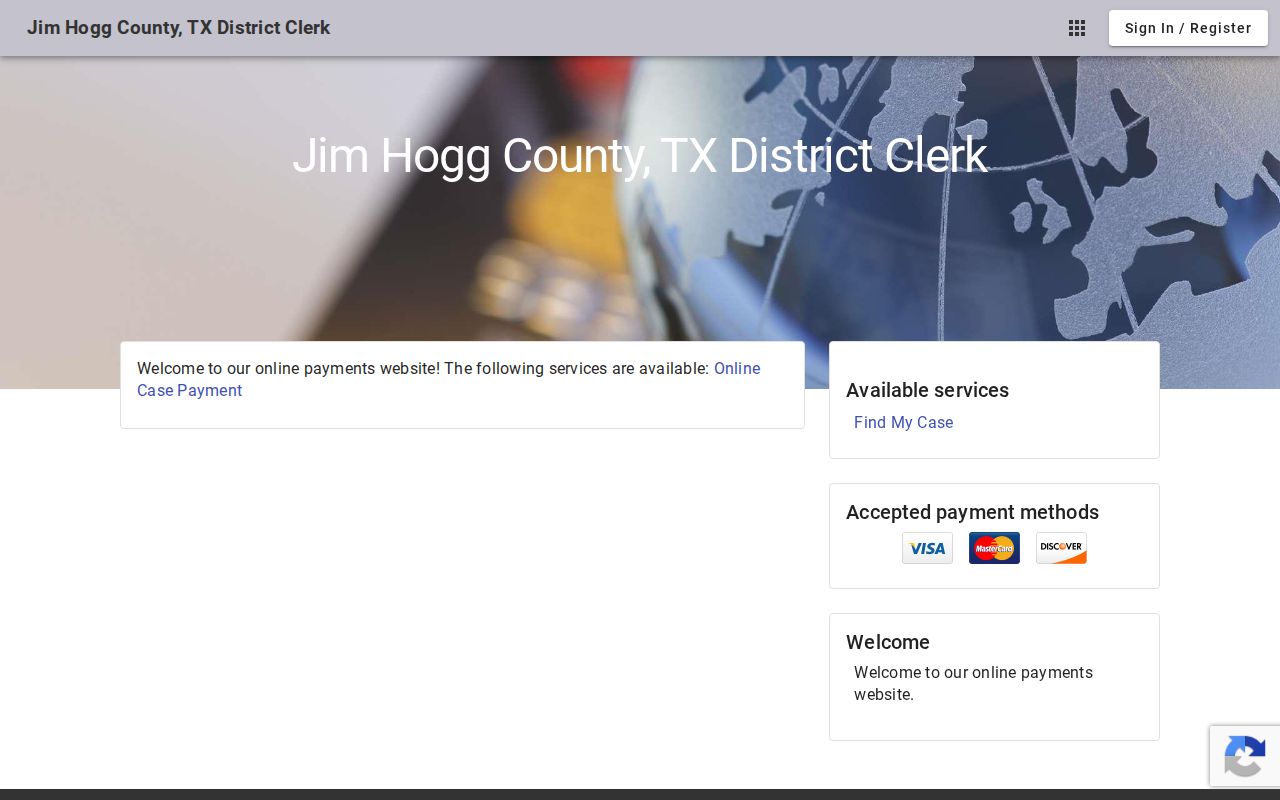
The portal works well for indexed cases and payment matters. It is not proof of a complete civil register. re:SearchTX can add a layer of permitted e-filed documents in participating courts, but Jim Hogg integration and live civil coverage are not assured. eFileTexas accepts filings; it does not amount to public docket access. The official Jim Hogg County home page gives the courthouse and department route for reaching the clerk and the local courts.
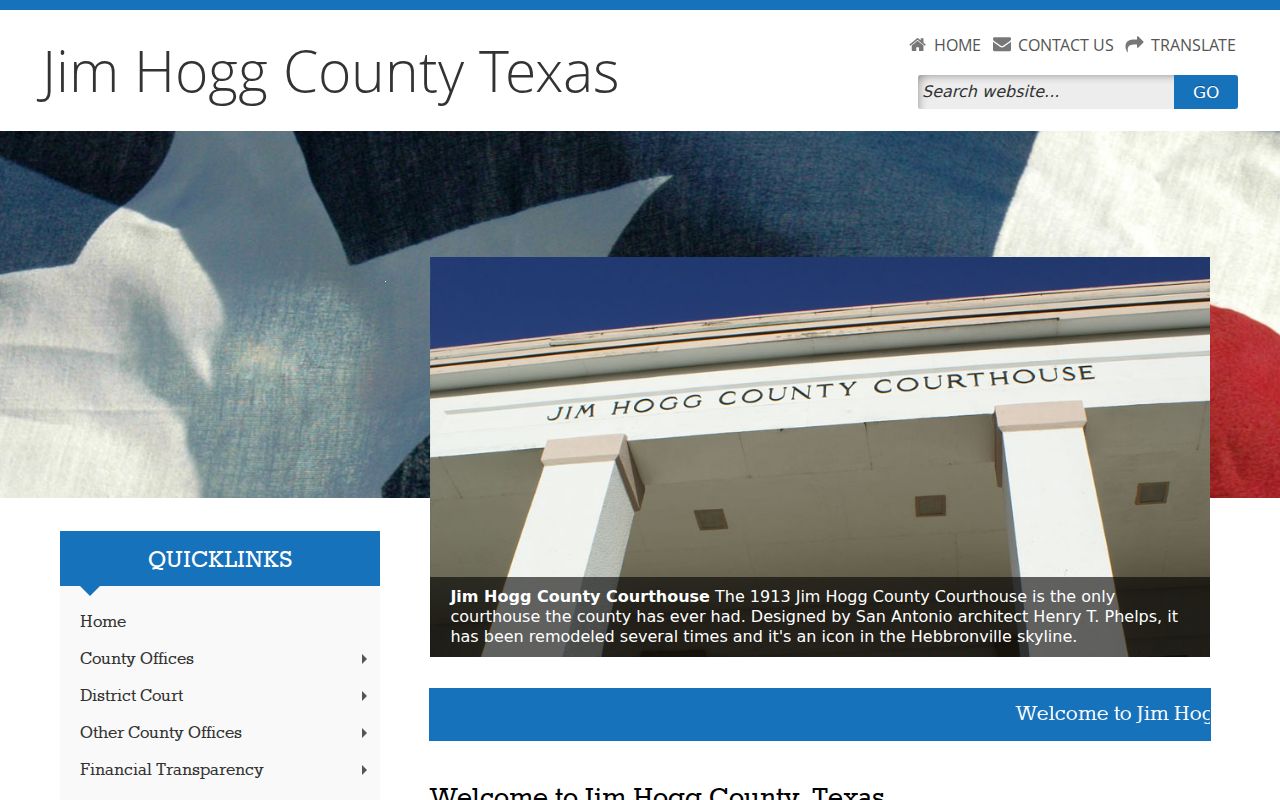
That county route matters most when a vendor screen lacks the case type. It also serves a reader who needs a certified paper from the clerk's office itself.
Inside a Jim Hogg County Civil Docket
The 229th civil PDF is a two-page setting calendar. Its header names the court, county, date, and time, and each row carries five fields. That compact layout is fine for confirming scheduled work, but it cannot stand in for the full chronological record.
| Cause No. | Examples followed an observed CC-YY-sequence pattern, but no official legend was located. |
|---|---|
| Style | May reflect plaintiff and defendant, petitioner and respondent, an IN RE matter, foreclosure, divorce, or property case. |
| Setting | May name a status, final hearing, temporary-order hearing, default request, judgment entry, or summary-judgment motion. |
| Attorney | Shows counsel or “Pro Se,” meaning self-represented, without a consistent side label. |
| Notes | Can mention a signed-order date or that an agreement was read into the record. |
The sheet omits all parties, a full ledger, every filing event, document images, and any final disposition block. Get the signed paper from the clerk.
Jim Hogg Civil Setting Language
A setting says what the court plans to address, not what the judge decided. That distinction matters most in family, foreclosure, and dispositive-motion entries.
- Default judgment or DWOP
- A motion setting. The local expansion of DWOP should be confirmed before relying on it.
- Summary judgment
- A hearing on a motion that could resolve issues. The listing is not the ruling.
- Temporary orders
- Interim family-law relief, not a final custody or final judgment.
- Entry of decree
- A decree-entry setting. The filed decree is authoritative.
- Pro Se
- A self-represented party or case-side entry, not an outcome.
- Status
- A progress setting rather than a final judgment.
Civil Case Types on the Docket
District civil settings in Jim Hogg County have included property and forfeiture matters, divorce, foreclosure, utilities or special commissioners, and other plaintiff-petitioner disputes. Family cases may involve sensitive child information. A published setting sheet is never permission to repeat those details.
| Matter | Likely route | Record to confirm |
|---|---|---|
| District civil or family | 229th court and district clerk function | Register, pleading, order, or judgment |
| County civil or probate | Constitutional County Court and county clerk function | County case or probate file |
| Small civil claim | Correct Justice Court precinct | JP docket and setting |
| Land instrument | County Clerk property index | Recorded instrument, not lawsuit docket |
Four Jim Hogg Civil Routes
The 229th District Court is the general district route. The Constitutional County Court page describes local civil jurisdiction beginning at $500 and not exceeding $5,000. It also covers probate work. The Justice Court page states that JPs hear most civil cases up to $10,000 and handle civil process along with listed foreclosure and lien duties. Let those published county descriptions guide routing, but confirm current jurisdiction and procedure with the court itself.
The clerk setup is unusual yet clear once split by function. Zonia G. Morales serves as County and District Clerk. Rae Gutierrez is listed for district criminal and civil cases. Kathy Morales takes county cases. Nelda Guerrero covers tax and foreclosure matters. Monica Guerrero handles child-support and CPS cases. Assignments shift, so cite your matter type and ask for current routing.
Jim Hogg Civil Docket Settings
The 229th serves Jim Hogg, Starr, and Duval counties. A caller should state Jim Hogg County, the civil cause number, and the date shown. The civil coordinator number is (956) 716-4800 extension 8139. Since a PDF can be superseded by a reset, continuance, or later order, the coordinator is the best channel for a current district setting.
A calendar note never replaces a signed order. Check the Notes entry. If it says an agreement was read into the record or gives an order date, ask the clerk for that order. A final-hearing label is likewise no proof that a final judgment was signed. The filed instrument shows what the court actually ordered and whether later activity changed it.
Jim Hogg Foreclosure Has Two Files
A foreclosure can touch both records. It reaches a civil case and county official records. The court docket tracks the lawsuit, settings, motions, and orders. A separate County Clerk property search exists. It indexes grantors, grantees, subdivisions, document types, numbers, recorded dates, and OCR text. That index helps with a recorded lien or foreclosure instrument. It is not a civil docket.
Search both only when the question calls for both. Ask the court clerk for the case file and use the property index for the recorded land instrument. One result cannot substitute for the other.
This split also prevents confusion about update dates. A property portal's "certified through" label describes the official-record index, not the status or freshness of a court case.
Jim Hogg Civil Workload Context
Texas Office of Court Administration data for fiscal year 2024 reported 721 active pending district civil cases at the start of the period. Jim Hogg County added 54 and disposed of 123, ending with 648 active pending. Those aggregate figures describe workload. They say nothing about the result of any named matter.
A shrinking pending count tells you nothing about how any one case ended. Settlement, dismissal, trial, transfer, the total alone can't say which occurred.
Civil Docket Access Rules
Rule of Civil Procedure 76a starts civil court records from a presumption of openness, though a sealing order can override that under the rule's standard. Rule 21c adds another layer: sensitive data must be redacted before papers circulate. Family and child-related records deserve extra caution. A case appearing on a public calendar does not mean every filing in it is open. If only part of a record is restricted, ask the clerk for a redacted version rather than the whole file.
Jim Hogg County gives you several documented ways in. The unified clerk sits at 102 E. Tilley in Hebbronville, and you can also call (361) 527-4031, mail P.O. Box 878, Hebbronville, TX 78361, fax (361) 232-5875, or send an official clerk email. Justice of the Peace matters run through 133 East David Street, reachable at (361) 527-5830. For a judicial-record request, name the court, the cause number, the date, and the exact paper you want. If denied, ask for a written basis. Then use the Rule 12.9 route. Certified copies carry statutory and local fees, so confirm the current total before you pay.